
Film Synopsis
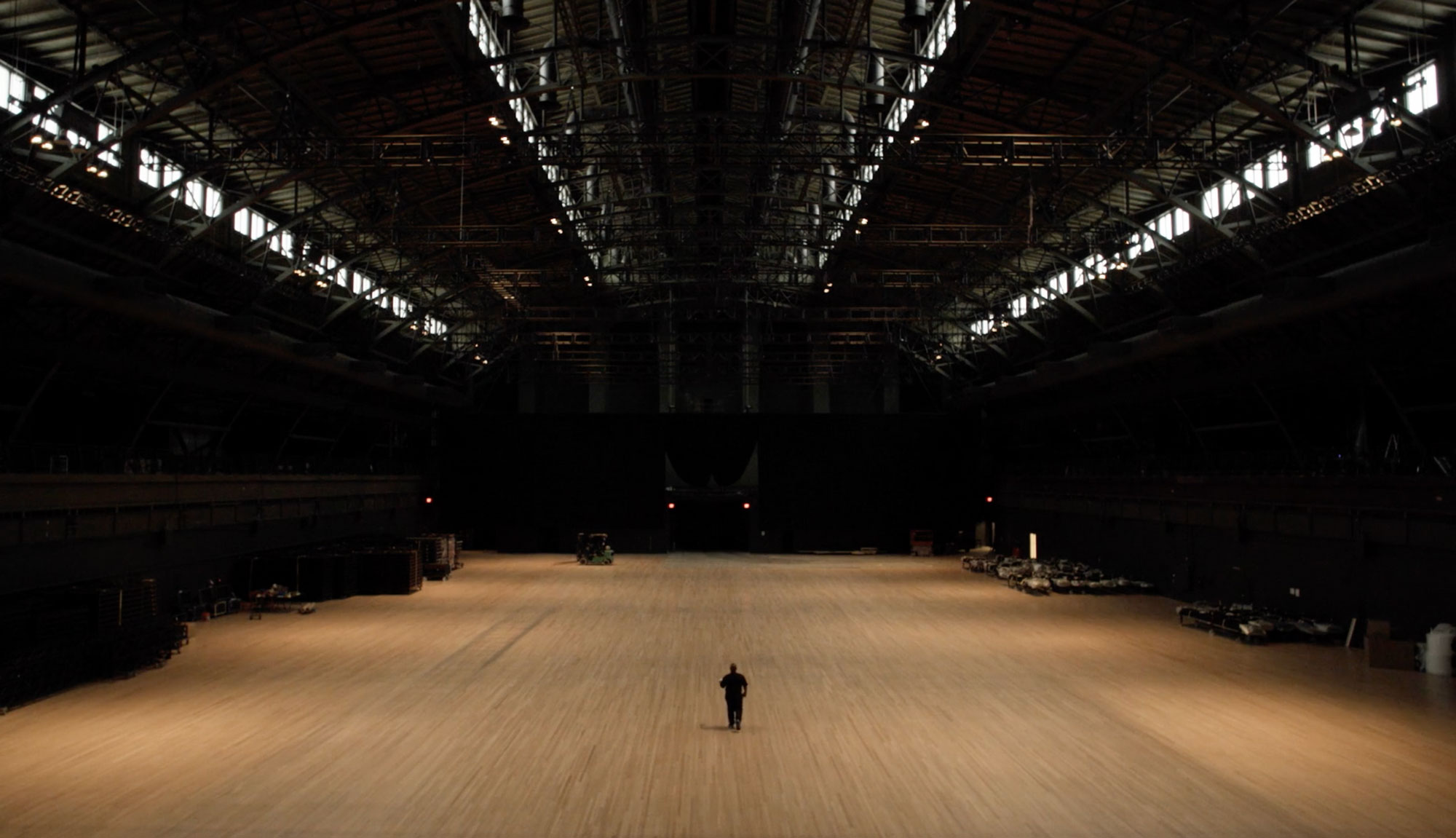
Assembly is a genre-defying film that blends documentary, performance art, and speculative storytelling to imagine Black and queer futures beyond conventional boundaries. The film follows internationally acclaimed artist Rashaad Newsome as he undertakes his most ambitious project to date: a multimedia exhibition and performance at the historic Park Avenue Armory. Once a bastion of white military power, the Armory is transformed into a vibrant celebration of Black and queer culture through video projections, holograms, sculpture, collage, music, dance, and African fractal patterns. In reimagining this iconic space, Newsome challenges colonial legacies while honoring the creativity, resilience, and complexity of Black experience.
To bring this vision to life, Newsome assembles a diverse international ensemble of vocalists, poets, musicians, and dancers whose personal stories become integral to the film. Performers from Brazil, Japan, Ukraine, and beyond fuse vogue with local dance traditions, creating a powerful dialogue between global cultures and the Black queer artistic forms that inspire them. Alongside breathtaking performances, the film highlights the journeys of collaborators who transform adversity into artistic expression: a Black trans woman who channels public hostility into strength, a vocalist who turns childhood trauma into healing, and a Brazilian performer whose movement practice challenges toxic masculinity. Together, they form a community bound by resilience, creativity, and collective care.
The film is guided by Being, a non-binary artificial intelligence that vogues, tells stories, and reflects on the world through the lens of Black feminist thought. More than a narrator, Being emerges as a fully realized character whose emotional journey unfolds alongside those of the human performers. As Being encounters skepticism and learns about the enduring impacts of colonialism, they become an advocate for decolonization and a symbol of a future in which technology can amplify marginalized voices rather than reproduce systems of exclusion. Their evolution creates a poignant parallel to the struggles and triumphs of the artists around them, blurring the boundaries between technology, humanity, and imagination.
Anchored by the presence of ancestors, Assembly weaves together past, present, and future in a powerful meditation on memory, liberation, and belonging. The film opens with a haunting vision of enslaved Africans lost at sea, establishing a spiritual framework that echoes throughout the story. Newsome’s journey to Ghana, where he reflects on the histories of those held in the dungeons of enslavement, deepens the film’s engagement with ancestral memory and intergenerational guidance. Through innovative hybrid storytelling, breathtaking visuals, and emotionally charged moments—including a memorial for murdered Black trans women that transforms into a protest march—Assembly transcends traditional documentary filmmaking. The result is a moving portrait of artists reclaiming agency through creativity, honoring those who came before them, and envisioning more just, joyful, and expansive futures for Black and queer communities around the world.
Use of AI
Being the Digital Griot is a real artificial intelligence whose spoken reflections are generated by the AI itself. However, AI was not used to create any of the film’s visuals. Being’s visual form was designed by Rashaad Newsome through 3D animation and brought to life cinematically through collaboration with skilled actors, performers, and animators. In the film, Being exists through a hybrid process: an actual AI voice and mind embodied through human performance, motion, animation, and cinematic craft.
For more info on the use of AI in Assembly, read Digital Griot: A Conversation with Interdisciplinary Artist Rashaad Newsome on the PBS website.